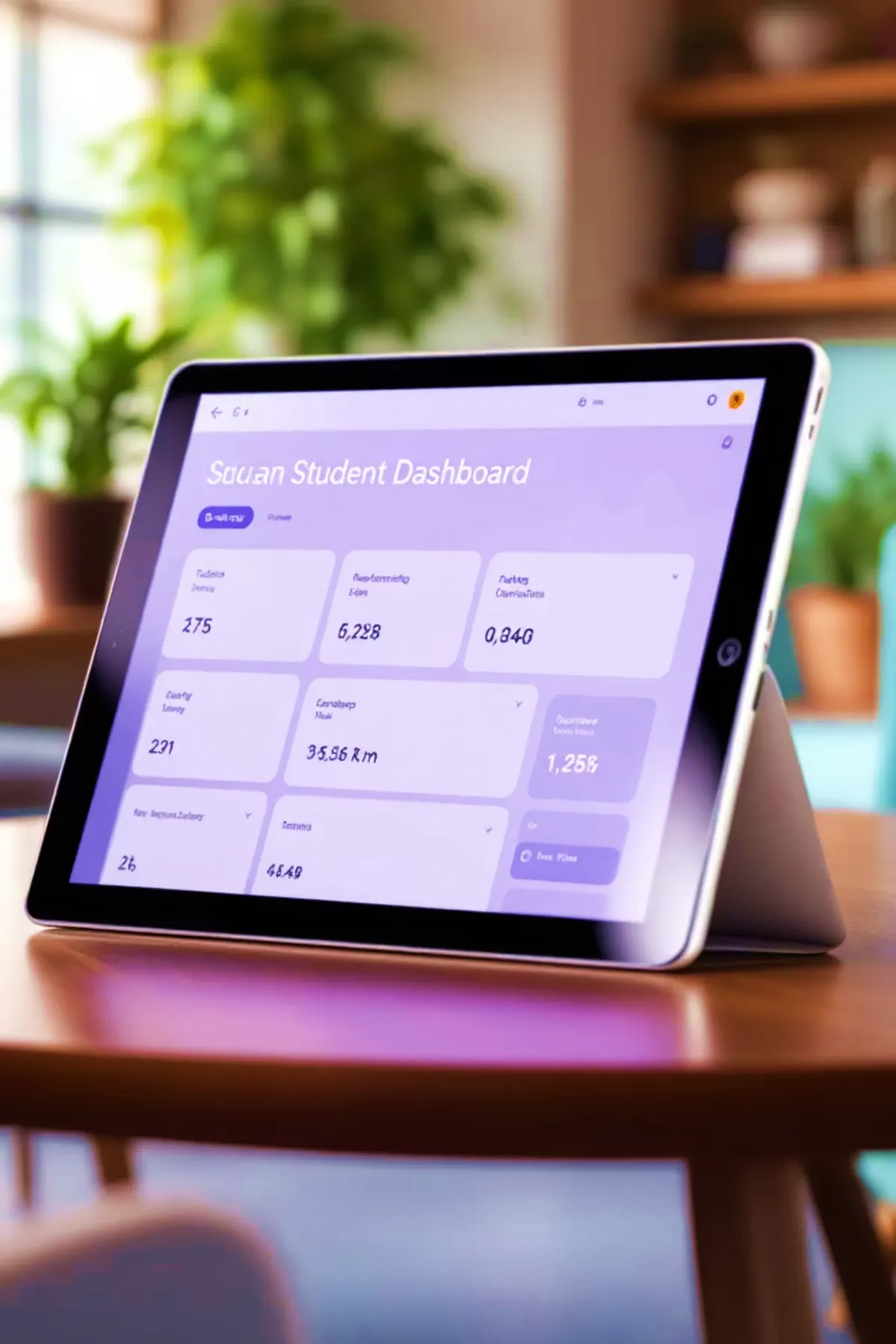
A connected school operating system for serious institutions.
Dhicampus School ERP brings the everyday administrative, academic, finance, staff, parent, transport, and reporting work of a school into one organized product direction. The page gives leaders a clear executive view, while the walkthrough maps the product to their own institution.
Built around how schools actually work, not around a generic template.
The system is shaped for owners, principals, administrators, accountants, teachers, transport teams, and parents. It keeps common school operations connected and helps every role work from a cleaner, more accountable operating view.
Leadership view
360
Admissions, fees, academics, staff, and branch performance in one direction.
Access model
Role
Users see the areas relevant to their responsibility and branch scope.
Hosting direction
Cloud
Built for modern web delivery, static marketing pages, and scalable application deployment.
Common capabilities
The familiar school workflows leaders expect, organized into one calm operating system.
Dhicampus SMES brings academic, administrative, finance, staff, communication, and reporting workflows into a structured ERP foundation for schools that want dependable daily operations.
01
Admissions and Enquiries
Manage enquiries, application stages, document checks, review decisions, and student onboarding across branch and academic-year scope.
02
Academic Operations
Organize academic years, classes, sections, subjects, attendance, exams, syllabus progress, timetable, and teacher assignments.
03
Fees and Payments
Support fee plans, invoices, payments, discounts, dues visibility, receipts, finance summaries, and accounting integration readiness.
04
Staff and Roles
Control access through user roles, branch access, permissions, staff profiles, leave, payroll, and operational accountability.
05
Parent Communication
Coordinate announcements, notifications, helpdesk conversations, WhatsApp-ready communication, and student/guardian updates.
06
Reports and Dashboards
View high-level admissions, attendance, fee, staff, branch, and KPI trends through management dashboards and analytics snapshots.
Product areas
The modules clients expect from a modern School ERP, presented as business capabilities.
These areas give school leaders confidence about coverage while keeping the conversation focused on business value, implementation scope, and how each team will use the product.
01
Admissions and student lifecycle
A structured front-office flow for enquiries, follow-ups, application status, document readiness, student records, guardian links, and academic-year movement.
02
Academics and classroom operations
Class, section, subject, timetable, attendance, examination, assessment, syllabus, and teacher coordination views for day-to-day academic control.
Employee records, role-specific access, branch scope, approvals, leave, payroll direction, and accountability controls for administrative teams.
05
Communication and parent engagement
Notices, reminders, parent updates, helpdesk-style communication, transport alerts, and WhatsApp/SMS/email-ready operational messaging.
06
Transport, resources, and campus work
Route planning, vehicle records, student transport allocation, inventory direction, assets, visitors, and support for routine campus operations.
SMES module map
A modular ERP view built around how schools actually run.
The platform is organized as a modular ERP so institutions can start with core operations and extend into finance, HR, engagement, transport, analytics, and integrations as they grow.
A school-wide view for leadership, administration, finance, academics, and operations.
The overview stays clear at the capability level. During the walkthrough, each role, approval path, report, and institution-specific decision can be mapped against the school's real operating model.
Single-school and multi-branch operating view
Academic year, class, section, and role-aware organization
Dashboards for owners, principals, administrators, accounts, and staff
Reports that support decision-making for owners, principals, accounts, and operations teams
Access control designed around actual school responsibilities
Integration-ready direction for payments, communication, documents, and migration
Before schools subscribe
The practical questions decision-makers ask before choosing a School ERP.
School owners, principals, accountants, and administrators usually compare ERP products on daily usability, fee accuracy, parent communication, reports, security, migration, training, support, and long-term scalability. Dhicampus addresses those concerns at the planning stage instead of treating them as afterthoughts.
01
Will it cover our core daily work?
Admissions, student records, attendance, timetable, examinations, fee collection, receipts, parent communication, staff workflows, and reports are treated as connected school operations.
02
Can parents, teachers, accounts, and management use it comfortably?
The product direction supports role-specific access so each team sees the work that matters to them, with mobile-friendly screens for everyday use.
03
How will fees, dues, receipts, and payment records be handled?
Fee planning, collection visibility, discounts, dues, receipts, summaries, and payment-gateway readiness are covered as a major operating area.
04
Can it grow with branches, users, and academic years?
The structure supports institution, branch, academic year, class, section, role, and staff responsibility so schools can scale without losing control.
05
What happens to our old Excel data or existing records?
Data migration is treated as a planned step with cleanup, mapping, validation, and staged onboarding so the transition is realistic.
06
What support and training will our team need?
Implementation planning includes stakeholder alignment, module rollout, staff training, accounts orientation, and a support path after launch.
Feature depth
More product coverage for schools that want clarity before a demo.
The list below keeps the explanation understandable while showing that the ERP is not limited to one department. It covers front office, academics, accounts, staff, parents, transport, reports, documents, and access governance.
Online and offline admission enquiry tracking
Student profiles, guardian details, documents, and academic history
Daily attendance, staff attendance direction, and absence visibility
Class, section, subject, teacher, timetable, and academic year setup
Exam planning, marks entry direction, report-card readiness, and performance summaries
Fee heads, fee plans, dues, concessions, receipts, and collection summaries
Parent notices, fee reminders, attendance alerts, and communication integration readiness
Transport routes, vehicle records, student allocation, and trip-level visibility direction
Staff roles, permissions, leave, payroll direction, and internal accountability
Leadership dashboards for admissions, academics, finance, staff, and branch performance
Document upload, verification flow, certificates, receipts, PDFs, and export-ready reports
Security, audit visibility, branch scope, and controlled access for sensitive school data
Implementation planning
A practical rollout path for schools moving from registers, spreadsheets, or disconnected tools.
01
Discovery
Understand school size, branches, fee rules, academic model, users, reports, and current pain points.
02
Scope
Prioritize modules such as admissions, fees, attendance, academics, communication, transport, and reporting.
03
Data
Plan Excel migration, student records, fee heads, staff lists, academic year setup, and validation responsibilities.
04
Pilot
Run selected teams through daily workflows before the full rollout so corrections are handled early.
05
Training
Train administrators, accounts, teachers, and management by role so adoption is practical.
06
Support
Review reports, user feedback, access rules, and next-stage enhancements after launch.
Controls and visibility
Designed for discipline across users, branches, and reports.
Branch-aware organization
Information can be viewed through school, branch, academic year, class, section, department, and responsibility scope.
Permission-first access
Role-based controls help different teams work confidently without giving every user access to every operational area.
School ERP FAQ
Answers to common questions before booking a walkthrough.
These answers help schools evaluate fit before discussing exact screens, pricing, data migration, and rollout scope.
Is Dhicampus School ERP suitable for schools in Guwahati and Assam?
Yes. The product direction is suitable for schools, institutions, and multi-branch education groups in Guwahati, Assam, North-East India, and other regions that need structured administration, fee management, academics, communication, and reporting.
Can it support parent communication and fee reminders?
The ERP overview includes parent communication, notices, attendance visibility, fee reminders, receipt direction, and WhatsApp/SMS/email integration readiness depending on implementation scope.
Can old Excel records be migrated?
Yes, migration can be planned through data cleanup, mapping, validation, and staged import. The exact effort depends on the quality and structure of existing records.
Can different users get different permissions?
Yes. Role-based access is a core product concern, covering owners, principals, administrators, accounts, teachers, transport teams, and branch-specific users.
Is this only for large schools?
No. The ERP can be discussed for single-campus schools, growing institutions, and branch-aware education groups. Scope should match the school’s actual needs.
Expected outcomes
The value school leaders should feel after implementation.
01
Less manual reconciliation between front office, accounts, academics, and management.
02
Cleaner visibility for single-campus and multi-branch institutions.
03
A safer way to scale operations without giving every user access to everything.
04
A product conversation focused on your school model, not a generic software demo.
Guided product walkthrough
See how the ERP can fit your school's structure, teams, and daily decisions.
The walkthrough is designed for school owners, principals, administrators, and accounts teams who want to understand module coverage, user access, reports, and implementation planning in practical terms.
Access, approvals, and user responsibilities are reviewed according to your team structure.
Reports and dashboards are explained by leadership, accounts, academic, and branch context.
Implementation scope is mapped after understanding your admission, fee, academic, and communication workflows.
Delivery partnership
Plan, build, deploy, and support business software with one reliable team.
From ERP products to custom portals, dashboards, integrations, and cloud-ready websites, Dhicampus helps organizations move from scattered manual work to secure digital operations.